

Agenda
Report workshop: “Syria One Year After the Revolution: The Role of Women and Minorities”
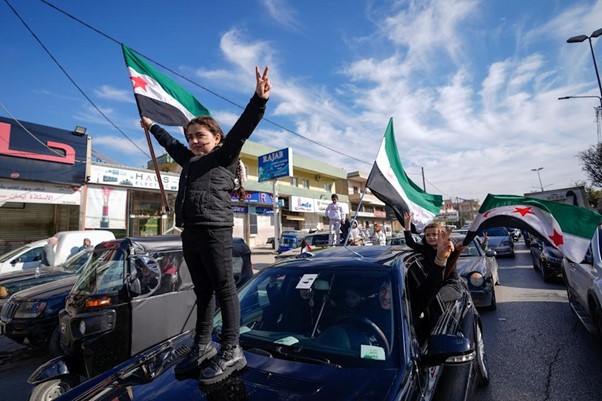
On 8 December 2024, the regime of Bashar al-Asad, the president of Syria whose dictatorial rule had been in place for decades (and, before that, his father Hafiz al-Asad’s), ended for good when he was overthrown through a revolution. To commemorate and reflect on this event and its possible implications for the future of Syria, the Netherlands Interuniversity School for Islamic Studies (NISIS) organised an event for a broader audience on 8 December 2025 – so exactly one year after the revolution – at Utrecht University.
We started the event with Professor Ugur Ümit Üngör (University of Amsterdam), who has worked extensively on genocide and mass violence, including in Syria, and has also published on the use of repression by the regime of Bashar al-Asad. His presentation focussed on Bayt Yashut, a village in northwestern Syria that has contributed in a major way to the make-up of the regime because of Hafiz al-Asad’s recruitment of many of its representatives to work in his intelligence services. Al-Asad senior’s shrew recruitment policies picked childhood friends and people he could thoroughly rely on from different tribes to be certain of their loyalty and to have the broadest possible tribal support.
The second presentation was by Dr Ali Aljasem (Utrecht University), whose recently completed PhD-thesis focussed on the emergence, mobilisation and operations of paramilitary groups – especially the Shabbiha group – and how their violence was employed by the previous Syrian regime during the uprising in Aleppo in 2011. In his presentation, Aljasem gave a useful overview of the plethora of intelligence, security and secret services employed by the former regime before delving into the origins and development of the Shabbiha and how its violence contributed to the war in Syria.
These presentations were followed by the screening of “For Sama”, a documentary by the Syrian film maker Waad al-Kateab from 2019. The documentary provided insight into the lives of the film maker, her husband Hamza, her family, colleagues and friends and especially her newborn daughter Sama. To state that this film was impressive would not do it justice: the sheer amount of suffering, death and destruction shown in this documentary, coupled with the amazing resilience, inventiveness and steadfastness of many ordinary Syrians is both heart-wrenching and strangely uplifting. Thankfully, the film also offered small glimpses of hope in the face of so much misery.
The film was commented upon by Cosette Molijn, a Dutch journalist who has reported widely on the Middle East and who has extensive on-the-ground experience in Syria. She not only reflected on the events shown in the documentary, but also recounted her own experiences working with Syrian organisations after the fall of the regime. She focussed particularly on how the country, which suffered from a dearth of civil society organisations during the Asads’ authoritarian rule for so many years, is now slowly but surely building up a societal buffer between the population and the state.
The topics of minorities and women that this event focussed on came up throughout the presentations. During the question and answer sessions, it became clear that the sectarian policies of the past regime had not only left their marks regarding people’s perception of minorities, but had also bred a strong sense of resentment towards supporters of the former regime, which could easily turn to violence. The position of women, similarly, is unclear and uncertain in the future Syria, with various parties and groups with sometimes highly diverse points of view on this issue jockeying for position.
All in all, the event not only informed us, but also showed us some of the complexities of the situation and the horror of war. NISIS would like to thank the speakers, the production company of “For Sama” for allowing us to screen the documentary and the HePIOF fund, the Department of Islamic & Arabic Studies at Utrecht University and the Focus Group Migration and Societal Change for co-financing this event. It is partly thanks to them that this event could take place.